







By Aaron Michael C. Sy, Reporter
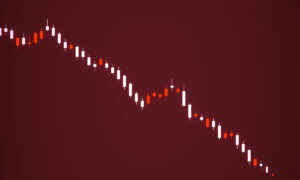
PHILIPPINE financial markets closed lower on the last trading day of 2025 — a year that saw new record lows for the Philippine peso and an over-five-year low for the stock market amid a corruption scandal that hurt investor sentiment.
The peso on Monday closed at P58.79 per dollar, depreciating by eight centavos from its P58.71 finish on Friday.
Year to date, it weakened by 94.5 centavos or by 1.61% from its P57.845 close on Dec. 27, 2024.
“The peso ended the year on a weaker stance as the latest third-quarter US GDP (gross domestic product) growth figures showed the robust performance of the US economy, providing boost for the greenback,” a trader said in a Viber message.
Another trader said in a text message that the peso was one of the weaker performing currencies among the region this year.
“Narrow interest differential vs. the USD, lackluster equities market, gloomy outlook due to corruption scandal all contributed to peso weakness,” the trader said.
The Philippine Stock Exchange index (PSEi) closed at 6,052.92 on Monday, 7.3% lower than the 6,528.79 close on Dec. 27, 2024.
“The PSEi’s decline this year is not just about numbers — it’s about trust and confidence. The corruption scandal, the deteriorating peso and the disappointing GDP performance for the third quarter have clouded our economy’s outlook and triggered persistent selling by foreign investors in the market this year,” PSE President and Chief Executive Officer Ramon S. Monzon said in a statement.
Mr. Monzon said there are “a lot of positives” to look forward to in 2026, as corporates continue to post earnings growth and more listings are expected.
“If our government succeeds in its drive to hold the corrupt accountable and institute real and lasting improvements in transparency and governance, our market should be one of the best-performing markets in the region next year,” he said.
China Bank Capital Corp. Managing Director Juan Paolo E. Colet said there was “too much uncertainty and disruption” that weighed on the local stock market this year.
“For many local equity investors, 2025 is perhaps the most disappointing year since the pandemic crash of 2020,” he said.
He cited US President Donald J. Trump’s tariff policies, the Philippine midterm elections in May and the flood control scandal as factors that affected stock market activity.
Mr. Colet noted the PSEi had underperformed most analysts’ initial base case targets.
“When we started the year, I don’t think a lot of us expected a massive corruption scandal to shake our stock market,” he added.
On Nov. 14, the PSEi plunged to 5,584.35, its weakest close in nearly five and a half years or since the 5,570.22 close on May 28, 2020. Investor confidence further fell after GDP grew by 4% in the third quarter — the slowest in more than four years. This brought the nine-month average to 5%, below the 5.5-6.5% GDP growth target for this year.
“It has been a bearish year for the local market, reflecting the drop in investors’ confidence towards the local economy amid its growth slowdown and dimmed outlook,” Philstocks Financial, Inc. Research Manager Japhet Louis O. Tantiangco said in a Viber message on Monday.
He said net value turnover averaged P5.91 billion per day in 2025, an improvement from P5.15 billion in 2024.
According to Mr. Tantiango, foreigners were net sellers in the local stock market with net outflows reaching P47.13 billion this year, 86.6% up from P25.25-billion net outflows in 2024.
“Well, a lot has certainly happened this year, some of which already started at the end of 2024 from President Trump’s policies, trade uncertainties, and we got macro-shock from lower growth levels, FX (foreign exchange) volatility, monetary policy guidance, and some may attribute geopolitical scandals that weighed on the market,” Regina Capital Development Corp. Head of Sales Luis A. Limlingan said in a Viber message last Tuesday.
Mr. Tantiangco said the local bourse also ranked among the worst performing markets in East and Southeast Asia this year.
AP Securities, Inc. Equity Research Analyst Shawn Ray R. Atienza said that even with solid corporate earnings, the PSEi still lagged due to corruption concerns, trade uncertainties, and weak spending dragging growth and triggering foreign fund outflows.
“Most investors toggled defensive mode on and shelled the entire year, leading to utilities and mining sector thriving and even breaching new highs. While most sector counters dove beneath the red seas as various headwinds affected toplines and eroded margins due to dampened demand, weather disruptions, and volatile commodity prices,” Mr. Atienza said in a Viber message last Monday.
PESO OUTLOOKThe peso was led by the dollar movement throughout 2025, Oikonomia Advisory and Research, Inc. Economist Reinielle Matt M. Erece said in a Viber message.
He said the local unit earlier in the year was dragged by the dollar’s appreciation due to hawkish expectations on the US Federal Reserve as Mr. Trump’s shifting tariff policies caused market jitters.
However, the peso further declined near the end of the year amid the dollar’s recovery and the corruption mess.
“The flood control corruption scandal has soured investor sentiment, causing capital outflows. The flight from Philippine assets caused the Philippine peso’s attractiveness to slip. While strong overseas Filipino worker remittances offset some of the slippage in USD-PHP exchange rates, it failed to reverse the impact of the corruption issue,” Mr. Erece said.
The peso fell to a new all-time low of P59.22 per dollar on Dec. 9.
“Hitting new lows hurts confidence at the margin, especially for foreign investors, but it is not panic-inducing on its own. What matters more is whether weakness becomes persistent and inflationary. So far, the impact has been contained, but expectations of further slippage can keep positioning cautious,” Philippine Institute for Development Studies Senior Research Fellow John Paolo R. Rivera said in a Viber message.
Mr. Erece said the peso hitting P60-per-dollar levels is a low possibility as it is expected to rebound in 2026, driven by managed inflation, strong business environment, and strong consumer demand.
“If political issues are addressed deliberately and productively, it can definitely help in restoring confidence in the country. Strong capital inflows will result in more demand for Philippine pesos, which can cause the PHP to appreciate.”
Mr. Erece added that economic managers could use the peso’s current weakness and implement strong industrial policies that encourage the selling of high-value goods to foreign countries.
“Strong industrial policy results in higher earnings from foreign countries through trade, which then results in faster economic growth,” he said.
Meanwhile, eManagement for Business and Marketing Services Managing Director Jonathan L. Ravelas said the peso could trade as low as P61 per dollar early next year due to pressure from global uncertainty and Fed rate cuts
“Expect it to trade in the P58- to P61-per-dollar range, with volatility tied to tariff, oil and geopolitical risks,” he said in a Viber message.
“For policy rates, the BSP will keep a cautious stance — maybe one or two cuts in the first half of the year as inflation stays tame. Peso performance matters, but it’s not the sole driver; inflation and growth risks weigh heavier. BSP’s top priority is price stability, not defending a level,” he added.
At its Dec. 11 meeting, the BSP lowered its benchmark rates by 25 bps to bring the policy rate to 4.5%, the lowest level in more than three years.
BSP Governor Eli M. Remolona, Jr. has said that the central bank has room for one more 25-bp cut next year as economic recovery will take longer than expected.
Its first policy meeting for 2026 is scheduled for Feb. 19.
“The (Philippine peso) will be driven by Fed-BSP policy differentials, capital flows, trade balance and remittances, and domestic confidence tied to fiscal execution and governance,” Mr. Rivera said.
The peso is also sensitive to external shocks and oil price movements, he added.
“Yes, (peso) can recover if inflation stays anchored, the Fed eases, and investment inflows improve, the PHP can recover modestly toward the high P58-P59 range. A stronger rebound would require clearer policy signals and faster growth momentum,” Mr. Rivera said.
For the first week of 2026, the trader expects the peso to move from P58.60 to P59 per dollar. — with AGCM