
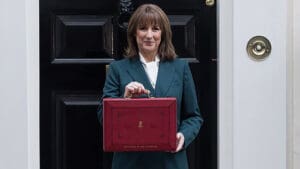








FINANCE SECRETARY Frederick D. Go is optimistic that the Philippine economy can recover and hit the government’s growth target on the back of faster, more productive spending.
Mr. Go said on Friday that he is “hopeful” that gross domestic product (GDP) growth can reach the government’s 5%-6% goal this year after expansion hit a post-pandemic low in 2025 due to the fallout from a corruption scandal linked to state infrastructure projects.
“I just have to say, though, that the whole year is four quarters. We’re not going to get there in the first quarter,” he said on the sidelines of an event.
Philippine GDP growth slowed to 3% in the fourth quarter from 5.3% in the same period a year prior and the revised 3.9% print in the third quarter, the government reported on Thursday.
This was the slowest print in nearly five years or since the 3.8% contraction in the first quarter of 2021. Outside of the pandemic, this was the worst since the 1.8% growth recorded in the fourth quarter of 2009, or during the Global Financial Crisis.
This brought full-year 2025 GDP growth to 4.4%, well below the government’s 5.5%-6.5% goal. This was slower than 2024’s 5.7% and was the weakest annual expansion since the 3.9% in 2011, counting out the 9.5% contraction in 2020 due to the pandemic.
These were below the 4.2% and 4.8% median estimates for fourth-quarter and full-year 2025 GDP growth in a BusinessWorld poll.
“We’re growing at 4.4%, so it’s not the end of the world,” Mr. Go said. “But having said that, again, all the fundamentals that allow the economy to grow at 5.5% are intact.”
“None of the macroeconomic fundamentals has changed. So, we should get back on track this year.”
He said they expect public spending to rebound this year, adding that officials have met to clear the spending program, with the top five spenders being the Public Works, Education, Health, Agriculture, and Transportation departments.
“The top five spenders were all there in that meeting, and we agreed with them what their spending will be, how much money will be released. I’m constantly coordinating with DBM (Department of Budget and Management) on the release of these funds because we need them to circulate in the economy.”
He added that they remain committed to fiscal discipline, which means smart spending while keeping the budget gap manageable.
“I sincerely believe it’s not about government spending more and more money every year — it’s about spending the same amount of money, perhaps an even lower amount of money, but using it for more quality and productive spending on projects that have a high multiplier effect.”
Mr. Go added that he also met with President Ferdinand R. Marcos Jr. on Friday on economic concerns.
RATE CUT
Following last year’s disappointing growth print, the Bangko Sentral ng Pilipinas (BSP) may deliver a sixth straight cut next month to prop up the economy, Standard Chartered Bank said.
Standard Chartered economist and foreign exchange analyst for ASEAN (Association of Southeast Asian Nations) Jonathan Koh said the BSP has room for another 25-basis-point (bp) cut amid sluggish growth and subdued inflation.
“So, with growth being soft, potentially coming in at the lower end of the government’s 5-6% forecast for this year, and with inflation being very benign, well within the BSP’s 2%-4% target range, I’m expecting the central bank to cut rates,” he said in a briefing in Makati on Friday. “I’m looking at a 25-basis-point cut in February.”
Standard Chartered’s latest growth forecast for this year stands at 5.7%, but Mr. Koh said they could cut this to around 5%. The government targets 5%-6% growth this year.
“I think sentiment needs to turn around before we actually see a real improvement in terms of growth,” he said.
He added that a protracted slowdown could give the BSP a reason to extend its easing cycle and deliver another 25-bp reduction for a terminal rate of 4%.
“I think if 2026 GDP growth risks falling below 5%, I think that could potentially lead to one more [cut].”
The Monetary Board has reduced benchmark borrowing costs by a total of 200 bps since August 2024, bringing the policy rate to 4.50%.
Last week, BSP Governor Eli M. Remolona, Jr. said another cut is uncertain, given current economic conditions. He added that while they will consider the GDP data, price stability remains their primary concern.
Mr. Koh also said they see the central bank trimming the reserve requirement ratio (RRR) to help boost liquidity that could potentially drive domestic demand.
“I think that’s on the table, potentially (in the) first half of the year,” he said.
The BSP reduced big banks’ RRR by 200 bps to 5% in March last year. It likewise cut digital banks’ reserve ratio by 150 bps to 2.5%, while that for thrift banks was lowered by 100 bps to 0%.
Meanwhile, Standard Chartered sees the peso trading at the P59-a-dollar level this year, with the greenback’s persistent weakness and Philippines’ ample foreign reserves to prevent it from sliding to the P60 range.
“I would say within the Asia region, peso is probably a currency that we are a bit more cautious on,” Mr. Koh said.
Downside risks for the peso include weaker service exports as the rise of artificial intelligence and shifting US policies could affect the business process outsourcing sector, as well as sluggish remittance growth.
Asked if the peso’s weakness could prevent the BSP from easing its policy stance further, Mr. Koh said: “How I see it now, my own view, is downside growth risk outweighs upside inflation risk.”
The central bank is mainly managing the exchange rate to curb inflationary pressures as a weak peso means the country would have to spend more on imports such as oil, he said.
PUBLIC TRUST
Addressing governance issues will be key to the Philippine economy’s recovery, another analyst said.
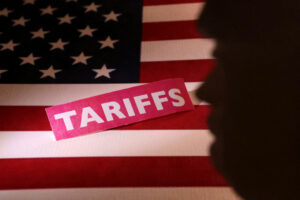
“The strains the Philippines are experiencing right now are twofold: public trust and tariffs,” Alvin Joseph A. Arogo, first vice president and chief economist at Philippine National Bank (PNB), said at a British Chamber of Commerce Philippines event on Thursday.
“It is essential for the Filipino people to regain public trust in order for strong growth to resume,” he said. “We could expect this weakness in public construction to last until the third quarter, using previous historical experience.”
Even with full-year 2025 growth falling well below market expectations and missing the government’s goal anew, this is “not a disaster,” Mr. Arogo said, adding that he expects the economy to post a “strong recovery” by 2027.
“A 4% growth is the envy of most developed economies. So, just to put it into perspective, 4% is slow for the Philippines, but it’s not a disaster. A disaster is what happened in 2020, when the economy shrank by close to 10%,” he said.
“There’s no need to panic, but some things must change. And at least, even without structural changes, the shift in sentiment alone will allow the Philippines to post stronger growth in 2027. So, 2026 is a critical year, but recovery next year is likely.” — Aubrey Rose A. Inosante, Justine Irish DP. Tabile, and Katherine K. Chan