




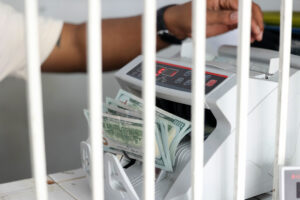





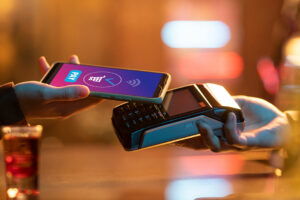
When we traveled years ago, we carried dollars and traveler’s checks. Then we moved to plastic, mainly credit cards. Now we pay with phones, QR codes, and virtual cards whose numbers live in a phone app. Payments keep getting faster and smarter as more people rely on nonbanks for services that used to live only inside banks.
We are living through a second revolution in money. Cash and checks yielded to cards, and cards are yielding to software-defined payments. E-wallets, QR codes, instant transfers, and phone apps now carry a growing share of our daily transactions. The question is whether our rules can keep up with the technology that moves our money.
I am pro-innovation, and I am also pro-trust. People need confidence that rules protect them and their savings. That means the same risks should face the same rules. If a firm takes money, moves money, or lends at scale, it should follow basic safeguards whether it holds a bank license or not.
And as payments go real time and cross-border, safety and transparency must be built in from the start. Prices should be clear, refunds easy, and help quick when things go wrong. The least tech-savvy Filipino should be safe, by default.
Three recent developments show why we should review and future-proof our money rules. First, the Bangko Sentral ng Pilipinas reopened digital-bank licensing in early 2025 with a cap of 10 players, then closed new applications before yearend to focus on quality and supervision.
Second, mobile super-apps now ship numberless, app-controlled credit cards such as Maya Black. These products reduce skimming and card-not-present fraud with dynamic codes and in-app controls, but they rely on the phone and on clearer dispute rules that ordinary users can understand and use.
Third, Project Nexus aims to make cross-border payments in ASEAN feel local by 2026. By scanning a merchant’s QR abroad, a traveler could pay from a Philippine wallet and settle in a chosen currency almost instantly. Convenience is rising. So should the safeguards.
With these shifts, money no longer lives only in banks. E-wallets, installment plans, and investment platforms offered by digital banks and electronic or mobile nonbanks now perform many bank-like functions. That is progress. What should match it is a rulebook that looks at what these firms do, not just what they are. If they offer similar risks to the public, they should meet similar protections for the public.
If you lend at scale, you should hold a reasonable cash cushion, test your loan book for bad weather, and report results clearly to regulators and the public. If you move people’s money, you should meet basic standards on uptime, dispute handling, cybersecurity, and honest fees.
And if you sell investments to the public, you should have tools that manage heavy withdrawals and protect long-term savers when markets turn rough. A level playing field rewards good risk management and honest pricing. It keeps public confidence in the system high.
QR codes and instant transfers are now part of daily life. Soon, paying across ASEAN through Nexus may feel like paying at home. That is progress, but faster money can spread mistakes faster. We should make true pricing visible before people tap to pay. Amount, exchange rate, and any fee should appear clearly in pesos on a single screen. No surprises.
We also need to guard against fraud and outages. Mobile signals drop and online systems go down. Backups should exist and should work. If one data center or telco link fails, another route should take over. If a cross-border corridor pauses, the app should say so in plain language, with a time for the next update.
And if a payment was unauthorized, the customer should be made whole quickly. If a customer was tricked into approving a payment, then there should be a fair, fast path to help, not a maze of finger-pointing between institutions. Resolution should be quick and fair.
New technologies such as numberless cards and dynamic codes reduce stolen-number fraud, but they rely heavily on the phone. That is why product defaults matter. Start with sensible spending caps, send an alert for every transaction, and include a one-tap freeze button that is easy to find. Keep alternatives ready when a phone is offline or the app logs a user out. Where two-factor prompts are necessary, instructions should be simple, and the fallback should not punish the customer for being cautious.
Clarity builds trust. The total cost of a loan or a foreign purchase should appear in pesos with no small print. If a high school student cannot explain the cost after reading the screen once, the message is not clear enough. People should know what they are getting into before they commit. Consumer protection is how systems earn repeat use and steady growth.
We should also plan for bad days. Disruptions happen, and electronic systems must be ready. Outages can affect banks, e-wallets, telcos, merchants, and customers at the same time. With people’s money involved, resilience is not optional. Critical systems should have redundant backups for everything that matters.
More important, inclusion expands the market. New systems should benefit everyone, not just early adopters. Seniors, persons with disabilities, people with limited education, and communities with weak connectivity should not be left behind. There should be easy ways to invite more people into formal finance.
The future of Philippine money is not a fight between banks and nonbanks. It is a partnership under rules that fit what each one actually does. If you lend, keep a cushion and tell the truth about price. If you move money, be fast, fair, and open about fees. If you build apps, protect the least tech-savvy user by default.
Do this and we will have a system that is safe enough to trust and open enough to grow. People will keep money digital with confidence. Rules should make finance do what it should do: help the economy grow and help people improve their lives.
Marvin Tort is a former managing editor of BusinessWorld, and a former chairman of the Philippine Press Council